

Here’s a question for you… who covers your IT when your IT person takes a week off?
Is it you? The secretary? Jim from marketing?
For a lot of Rhode Island businesses, the honest answer is nobody. You have one good person, maybe two. They handle the help desk, updates, vendors, backups, new laptops, and security alerts. They know your systems better than anyone. And when they’re out sick, on vacation, or buried in a big project, everything else waits.
That’s not a strike against your IT person; it’s a big responsibility to handle that on your own. Instead, it’s a coverage problem. One person can’t watch your network all day and all night. They can’t keep up with every new threat and still finish the projects that help you grow. Co-managed IT services close that gap. And they do it without replacing the person you already trust.
What Are Co-Managed IT Services?
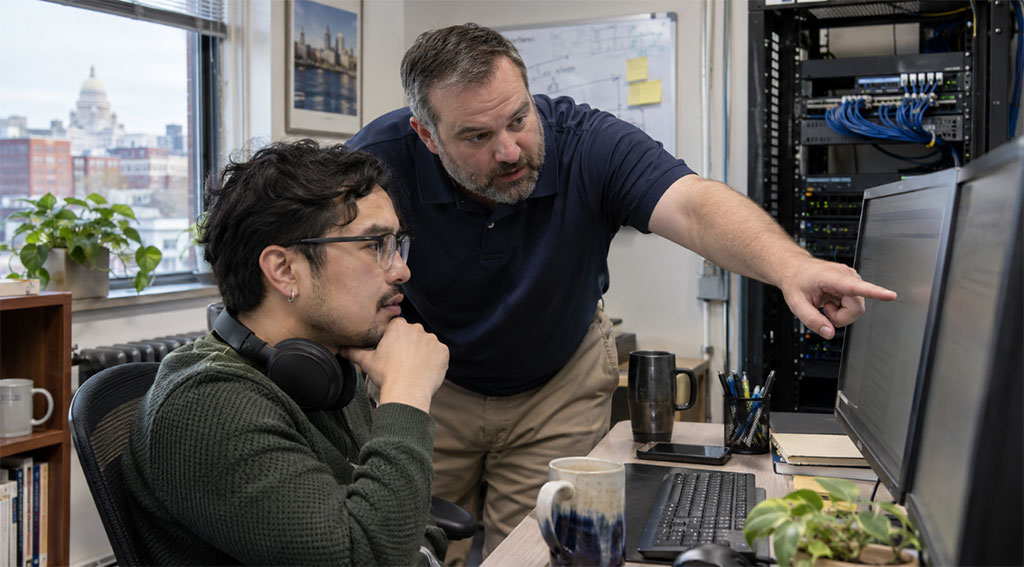
Co-managed IT services are a partnership. An outside IT company works side by side with your in-house IT person or team. Your people stay in charge of the day-to-day. The outside team adds tools, extra hands, around-the-clock monitoring, and expert backup.
Think of it like a good foreman who brings in a specialty sub for the electrical work. The foreman still runs the job. The sub brings skills and equipment the crew doesn’t have. Nobody loses their spot. The job just gets done better.
Here’s what the outside team usually adds:
- Round-the-clock watch over your network, devices, and security
- Backup coverage for vacations, sick days, and busy seasons
- Security tools that cost too much or take too much time for one person to run
- A second set of eyes when a problem gets tough
- Help with planning, budgets, and big projects
Your in-house person keeps what they do best. They know your people, your software, and your quirks. They set the priorities. The partner fills in around them.
How Is Co-Managed IT Different From Fully Managed IT?
The difference comes down to who leads. With fully managed IT, an outside company runs all of your technology. With co-managed IT, your own person leads and the outside team backs them up.
Most businesses land in one of three setups:
- In-house only. Your team handles everything alone. It works fine until your IT person gets sick, quits, or gets buried. Then you carry all the risk.
- Fully managed. You hand your technology to an outside team. This is often the best fit when you don’t have IT staff at all. Our managed IT services work this way.
- Co-managed. Your team leads. A partner backs them up with depth, coverage, and expert help. You keep control and lose the single point of failure.
One isn’t better than the others. The right choice depends on what your needs are for your business. If you have a solid IT person you want to keep, co-managed IT is usually the model that makes the most sense.
One IT Person May not Be Enough Anymore…
The job has grown faster than one person can keep up with. Ten years ago, IT meant fixing printers and resetting passwords. Today it means cloud apps, remote workers, cyber insurance forms, phone systems, backups, and a steady stream of new threats. Not to mention the elephant in the room… AI.
It’s been the biggest disruptor in the technology sphere since the internet and smartphones. Keeping up with how fast it’s changing, the new threats it brings, and the new potential avenues for development can be a lot for one person or a small team to handle.
Security alone could fill a full-time job. Scammers now go after small and midsize businesses. They know these companies often have weak defenses.
When one person tries to do it all, something slips. Most of the time, it’s the work nobody sees until it’s too late. Think updates, backup tests, and security checks. A co-managed partner picks up that load so your person can focus on the work only they can do.
Is Co-Managed IT Cheaper Than Hiring Another IT Person?
For most small and midsize businesses, yes, and you get more coverage for the money. Hiring is the first thing most owners think of when their IT person is stretched thin. But look at what that hire really costs.
The median annual wage for network and computer systems administrators was $99,130 in May 2025.
If you want someone focused on security, the bar is higher.
The 2025 median pay for information security analysts was $129,180.
Those numbers don’t include benefits, training, or the tools that person will need. And even after you pay all of that, you still have one more person with one set of skills and one set of working hours.
With co-managed IT, you pay a predictable monthly cost for a full bench of people. You get security experts, help desk staff, and senior engineers. You get coverage at night and on weekends. And you only pay for the services you choose.
Is Co-Managed IT Right for Your Business?
Co-managed IT is a strong fit if you have an IT person you trust who is carrying too much. Here are the signs to watch for:
- Tickets pile up and your team waits days for simple fixes
- Nobody can cover IT when your person is out
- You don’t have a written and tested plan for AI
- Big projects keep getting pushed to “next quarter”
- Your cyber insurance company is asking questions you can’t answer
- Your IT person works late nights and weekends to keep up
- You aren’t sure your backups would actually work
If two or more of those sound familiar, co-managed IT is worth a closer look.
It’s not the right fit for everyone. If you have no IT staff at all, fully managed IT will likely serve you better. If you already have a large IT department with its own security team, you may not need the extra layer. And if you only want the cheapest option, co-managed IT isn’t built for that. It’s built for coverage and peace of mind.
Will Co-Managed IT Replace Your IT Person?
No. A good co-managed partner makes your IT person better at their job, not easier to replace. This is the question most owners ask first, and it’s the fear most IT people have too.
The right partner works with your IT people, never around them. Your person stays in charge of the day-to-day. They get access to better tools, coaching from senior engineers, and real backup when things get busy. That means fewer late nights, stress-free vacations, and more time for the projects that help your business grow.
What Should You Look for in a Co-Managed IT Partner?
Look for a partner that respects your team and fits the way you already work. Whether you’re in Providence, Boston, or Worcester, these are the things that matter most:
- A clear map of who does what. You should know exactly which tasks your person owns and which the partner owns.
- Choice, not a forced bundle. You should pick the services you need and skip the ones you don’t.
- Shared tools. Your IT person should get to use the same help desk, notes, and monitoring tools the partner uses.
- Real security depth. Ask what they do for threat detection, backups, and training. Strong cybersecurity should be part of the plan, not an add-on.
- Local, human support. You want people who can show up in person and answer the phone.
- Regular reviews. Good partners meet with you to look at what’s working and what needs to change.
Key Takeaways
- Co-managed IT keeps your in-house IT person in charge while an outside team adds tools, coverage, and expert help.
- One IT person can’t watch your systems around the clock, so threats and missed backups slip through after hours.
- A second full-time IT hire often costs more than a co-managed plan and still leaves gaps in skills and hours.
- The best co-managed partners document who does what and let you pick only the services you need.
Ready to Give Your IT Person Real Backup?
If your IT person is carrying everything alone, it’s time to give them a team. Book a free discovery call with Attain Technology. We’ll learn how your IT works today, find the gaps, and show you what co-managed support could look like for your business. No pressure, just straight answers.
Why Choose Attain Technology?
At Attain Technology, we’ve helped New England businesses with their IT since 2008. We’re veteran-owned and based in Providence, with direct access to the owner. With co-managed IT, we work with your IT people, never around them. You get tools, people, and protection in one plan, tailored to your business, with simple, straight answers every time. If you’re ready to give your team the backup it deserves, we’d love to talk.
FAQ
What are co-managed IT services?
Co-managed IT services are a team-up between your own IT person and an outside IT company. Your person stays in charge of the day-to-day. The outside team adds 24/7 monitoring, security tools, backup coverage, and expert help. Rhode Island businesses get more depth without losing the IT staff they already trust.
What is the difference between co-managed IT and fully managed IT?
The difference is who leads. With fully managed IT, an outside company runs all of your technology. With co-managed IT, your own IT person leads and the outside team backs them up. Fully managed fits businesses with no IT staff. Co-managed fits businesses with a good IT person who is stretched thin.
Will co-managed IT replace my in-house IT person?
No. A good co-managed partner works with your IT person, not around them. Your person stays in charge of the day-to-day. They get better tools, coaching from senior engineers, and backup when things get busy. That means fewer late nights and real coverage when they take a vacation or a sick day.
Is co-managed IT cheaper than hiring another IT person?
For most small and midsize businesses, yes. A new IT hire costs a full salary, plus benefits, training, and tools. And you still only get one person. A co-managed plan gives you help desk staff, security experts, and engineers for a predictable monthly cost. You also get coverage at night and on weekends.
How do I know if my Providence business needs co-managed IT?
Watch for a few clear signs. Tickets pile up, nobody covers IT when your person is out, and big projects keep getting pushed. Your IT person works late nights, or your cyber insurance company asks questions you can’t answer. If two or more sound familiar at your Providence business, co-managed IT is worth a closer look.
