
Blue network cables in server rack

Structured Cabling & Low Voltage Wiring
Reliable Connections, Built to Last

At Attain Technology, we make sure your business stays connected with dependable cabling solutions. Whether you need a single connection or a full-scale network, we’re here to help.
LET'S TALK Get a Quote
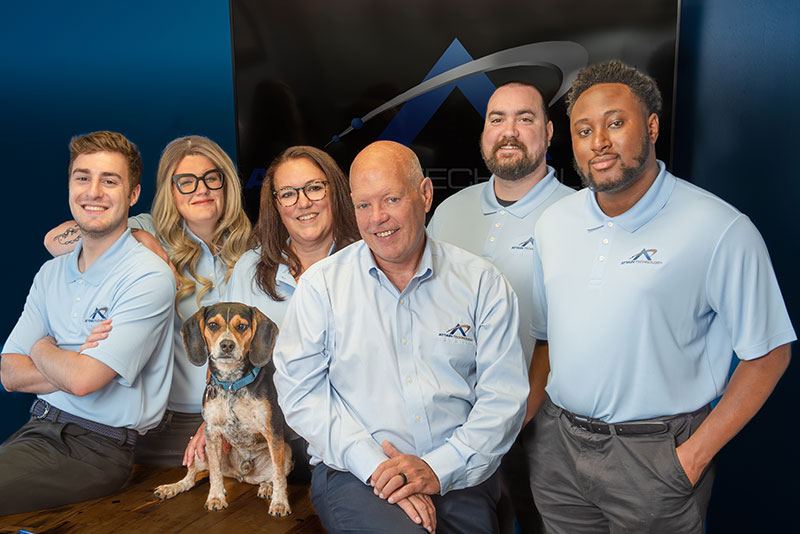
Attain Technology group photo with a dog. New England based

Why Choose Attain Technology for Their Structured Cabling Needs

Reliable connectivity starts with a strong foundation. Attain Technology designs and installs structured cabling and low-voltage wiring that support your business today and scale for tomorrow. Whether you’re a construction company managing multiple job sites, a manufacturer keeping production lines running, or a professional services firm handling high data demands, our team ensures every connection is fast, organized, and dependable. We handle design, installation, testing, and certification so your network works seamlessly from day one. Based in New England, we proudly support businesses across Boston, Providence, Hartford, Worcester, and surrounding areas with high-quality infrastructure built to last.

Network switches with fiber optic cables

Our Services

Voice & Data Cabling

Connect phones, computers, and essential devices.

Fiber Optic Cabling

Fast, future-ready connections for your business.

Low Voltage Wiring

Perfect for security systems, audio, and more.

Cabling Cleanup

Organize messy wiring for easier management.

Tangled orange electrical cables overhead

New Builds & Renovations

We handle design, permits, and installation.

Frequently Asked Questions

Structured cabling is the organized system of cables, connectors, and hardware that forms the physical backbone of your office network. It’s what connects your computers, phones, printers, wireless access points, security cameras, and servers to each other and to the internet.

It matters because every other technology service your business depends on—Wi-Fi, VoIP, cloud access, cybersecurity tools, and day-to-day file sharing—runs on top of this physical infrastructure. Poorly designed or aging cabling causes slow network speeds, dropped connections, intermittent outages, and troubleshooting nightmares. Properly designed structured cabling eliminates these problems and provides a reliable foundation that supports your business for years.

These are categories of Ethernet cable that differ in how much data they can carry and how fast.

  • Cat5e supports speeds up to 1 Gbps (gigabit per second) and is adequate for many basic office environments.
  • Cat6 supports speeds up to 10 Gbps over shorter distances and offers better resistance to interference, making it the current standard for most new office installations.
  • Cat6a extends that 10 Gbps capability over longer distances and provides even greater shielding against electromagnetic interference—making it ideal for demanding environments or future-proofing.

Your cabling provider can recommend the right category based on your current network needs, the size of your office, and how long you want the installation to remain viable without replacement.

Fiber optic cabling transmits data using light instead of electrical signals, which allows it to carry data over much longer distances at much higher speeds than copper Ethernet cable. Businesses typically invest in fiber optic cabling when they need to connect buildings that are far apart (like separate structures on a campus), when they require extremely high-speed connections between server rooms and network equipment, or when they need to future-proof their infrastructure for rapidly growing data demands. Fiber is also immune to electromagnetic interference, making it ideal for environments with heavy electrical equipment.

For most office workstation connections, copper cabling (Cat6 or Cat6a) remains the practical and cost-effective choice.

A network rack (sometimes called a server rack or data rack) is an enclosed cabinet that houses your networking equipment—switches, patch panels, routers, firewalls, and sometimes servers—in an organized, ventilated, and secure location.

Any business with more than a handful of networked devices benefits from a properly built network rack. It keeps equipment organized, protects hardware from dust and accidental damage, improves airflow and cooling, and makes troubleshooting and maintenance significantly easier. If your office currently has networking equipment scattered across closets, desks, or shelves, consolidating into a professionally built rack is one of the most impactful infrastructure investments you can make.

The timeline depends on the size of the space, the number of cable runs needed, and the complexity of the installation. A small office with 20 to 30 cable drops might take a few days. A larger facility with hundreds of runs, multiple floors, or specialized requirements (like fiber between buildings) could take one to several weeks. A professional cabling provider will survey your space, design the cable routes, and provide a detailed project timeline before any work begins. Most installations are planned to minimize disruption to your daily operations—work can often be scheduled after hours or in phases for occupied spaces.

Cable certification testing uses specialized equipment to verify that every cable run in your installation meets industry performance standards. The tester checks for proper signal strength, acceptable noise levels, correct wiring configuration, and compliance with the specifications for the cable category (Cat5e, Cat6, Cat6a, etc.).

This matters because even a small installation error—a kinked cable, a bad connector, or a run that’s too long—can cause intermittent network problems that are extremely difficult to diagnose after the fact. Certification testing catches these issues before your network goes live and provides documented proof that your infrastructure is built to specification.

Yes. Modern structured cabling systems are designed to carry multiple types of traffic over the same infrastructure. In addition to computer networking, structured cabling supports VoIP phone systems, wireless access points, security cameras (IP-based surveillance), digital signage, access control systems (badge readers, door locks), audiovisual equipment, and IoT (Internet of Things) devices. This is why the term ‘low-voltage wiring’ is often used alongside structured cabling—it encompasses all the data and communication wiring in a building that operates at low voltage, as opposed to the high-voltage electrical wiring that powers lights and outlets.

bg home benefits

Keep Your Focus On Your Business

You have too much to do. You are coordinating schedules, employees, subcontractors, and deliveries for multiple projects while keeping your clients up-to-date and satisfied with the progress. The last thing you need on your mind is your computers, your network and your cybersecurity. At Attain Technology we take the burden of Information Technology off your hands, and ensure your computers and network are secure and ready to work when you are.

get a quote (401) 400-0813