
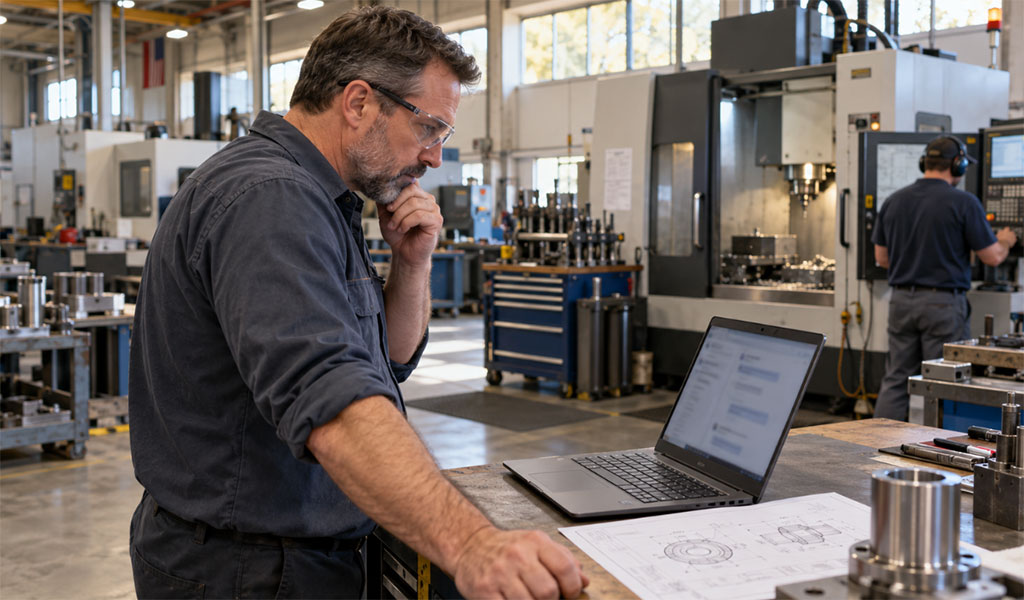
Someone in your plant used AI at work this week. Maybe it was your estimator. Maybe it was your quality manager. Maybe it was the new hire on second shift. The real question is not whether your team uses AI. It is whether they followed any rules when they did.
Most Massachusetts manufacturers cannot answer that question. AI showed up in the front office and on the shop floor faster than anyone wrote rules for it. Your employees did not wait for permission. They found free tools that made their day easier, and they started using them. Leaving you and your processes out of it.
That is great that they are bringing initiative, but AI is not just any tool, it is powerful and can get out of hand if left unchecked. This scenario is becoming more and more common as time goes on as well.
78% of AI users are bringing their own AI tools to work, and it’s even more common at small and medium-sized companies, at 80%.
That’s not a reason to panic. It’s a reason to set rules. Here’s why rules matter so much in manufacturing, and what yours should cover.
Why Does AI Need Strict Usage Rules?
AI needs strict usage rules because many AI tools can see, store, and keep whatever your employees’ type into them. Once your data leaves your building, you cannot pull it back.
So, what are AI rules? They are a short list of do’s and don’ts. They tell your team which AI tools they can use, what information they can put into those tools, and when a person has to check the result. Think of them as a manufacturing AI policy your team can actually read in five minutes.
Here is why this matters. AI is not like a calculator that forgets your numbers when you hit clear. Many free AI tools store what you type on outside servers. Your team may not know where that data goes or who can see it later.
What Is Shadow AI, and Is It Already in Your Plant?
Shadow AI is any AI tool your team uses without your approval. Most plants already have it. It hides in personal ChatGPT accounts, phone apps, and browser add-ons that nobody signed off on. Again, this may not be done maliciously, but it is still an issue.
In a manufacturing business, shadow AI tends to show up in everyday jobs like these:
- Writing or rewriting quotes for customers
- Turning old work instructions into new SOPs
- Summarizing long customer specs or purchase orders
- Translating instructions for operators who speak another language.
- Looking up what a machine error code means
- Building spreadsheets to track scrap, downtime, or orders
None of these tasks sound dangerous. But each one can involve your drawings, your pricing, or your customer data. That is where the risk lives.
Shadow AI is also expensive when it goes wrong.
One in five organizations studied (20%) experienced breaches linked to shadow AI. When AI gets things wrong and no one is aware, this can quickly mess up production plans and cost your team valuable time and money.
What Do Massachusetts Manufacturers Stand to Lose?
Your biggest risk is your own knowledge leaving the building one prompt at a time. Your process, your pricing, and your customer trust took years to build. A careless paste can give them away in seconds.
Here is the kind of data your rules need to protect:
- CAD files, part prints, and drawings
- Process settings, tolerances, and recipes
- Customer specs shared under an NDA
- Quotes, pricing, and margins
- Supplier contracts and costs
- Employee records and payroll details
- Passwords and logins for your ERP or shop floor systems
Intellectual property is where the damage runs deepest.
In shadow AI-related breaches, intellectual property carried the highest cost per record, at $178 per record.
There is also a Massachusetts angle many owners miss. It is a state rule called 201 CMR 17.00. If your business holds personal data about Massachusetts residents, you must keep a written security program. That program must include discipline for people who break its rules. If someone in HR pastes employee records into a free AI tool, your written program needs to have covered that. Clear AI rules close that gap. Talk with your attorney about how the law applies to your business.
Can’t You Just Ban AI at Work?
Banning AI usually pushes it out of sight instead of stopping it. Your employees carry phones with AI apps built in. A ban just means you will not know when they use them.
A ban also costs you. Your competitors in Worcester, Framingham, and across the state are using AI to quote faster, write cleaner work instructions, and spot problems sooner. If you shut AI off completely, you give up those gains while the risk stays in your employees’ pockets.
The better path is guided use. Pick safe tools. Set clear limits. Show people what good use looks like. When your team knows the rules, they stop hiding their AI use and start bringing you good ideas.
What Rules Should Your Employees Follow?
Your AI rules should fit on one page and answer a few plain questions. If a rule needs a lawyer to explain it, your operators will not follow it.
Start with these five rules:
- Use approved tools only. Pick business versions of AI tools that do not train on your data. Free personal accounts are off limits for work.
- Keep sensitive data out. No drawings, customer specs, pricing, employee records, or passwords go into any AI tool unless leadership has approved that tool for that data.
- A person checks the work. AI can be wrong and still sound sure of itself. A qualified person reviews any AI output before it touches a part, a customer, or a safety step.
- Ask before you connect. Nobody links an AI tool to email, your ERP, or shop floor machines without approval.
- Speak up fast. If someone shares the wrong data by mistake, they report it right away. Quick reports limit damage, so do not punish honesty.
Then name one person who owns the rules. That person answers questions, approves new tools, and updates the list as things change. In a smaller plant, that may be you, your operations manager, or your AI consulting partner.
How Do You Roll Out AI Rules Without Slowing Production?
You roll out AI rules the same way you roll out any safety practice: short, simple, and repeated. Nobody on your floor thinks lockout/tagout slows the plant down. It keeps people safe so the work can keep moving. AI rules do the same job for your data.
Here is a simple rollout plan:
- Find out what is in use. Ask your team which AI tools they use today. Make it safe to answer honestly.
- Write your one page. Use the five rules above as your starting point.
- Train in short bursts. A 20-minute session at a shift meeting works better than a long class.
- Give them a better tool. Rules land easier when you hand people an approved tool that does the job well.
- Review every quarter. AI changes fast. Your rules should keep up.
We created an entire getting started with AI playbook. You can see it here.
Key Takeaways
- Your plant likely has AI in use today, whether you approved it or not.
- Drawings, process settings, customer specs, and pricing are the manufacturing data most at risk when AI use has no limits.
- Massachusetts law already calls for a written security program to protect residents’ personal data, and AI use belongs in it.
- Guided use with approved tools beats a ban, because a ban hides AI use but does not stop it.
Not Sure What AI Your Team Is Using?
If you do not know which AI tools your employees use or what data goes into them, that is the place to start. Book a free AI Strategy Discovery Call with Attain Technology. We will help you find the shadow AI in your plant and build simple rules your team will actually follow.
Why Choose Attain Technology
At Attain Technology, we have supported New England manufacturers for nearly 20 years. We know your systems have one job: keep production moving. Our proactive IT management, straight answers, and 24/7 human support keep your plant running and your data protected. When you are ready to use AI without putting your expertise at risk, we will help you do it the right way.
FAQ
Why does AI need strict usage rules?
AI needs strict usage rules because many AI tools can store whatever your employees type into them. Without rules, your team may paste drawings, pricing, or customer specs into free tools you don’t control. Clear rules tell your team which tools are safe, what data stays out, and when a person must check the work.
What is shadow AI in manufacturing?
Shadow AI is any AI tool your team uses without your approval. In a plant, it often shows up when workers use their own ChatGPT accounts or phone apps to write quotes, build SOPs, or sum up customer specs. The risk is that your drawings, prices, and customer data end up in tools nobody checked.
What should Massachusetts manufacturers keep out of AI tools?
Keep sensitive data out of any AI tool your leaders haven’t approved. That includes CAD files, part prints, process settings, customer specs shared under an NDA, quotes, pricing, employee records, and passwords. For a Massachusetts plant, your process and pricing took years to build. One careless paste can give them away in seconds.
Does Massachusetts law require rules for employee AI use?
Massachusetts law doesn’t name AI, but it still matters. Under 201 CMR 17.00, if you hold personal data about Massachusetts residents, you must keep a written security program. If staff paste employee records into AI tools, that program should cover it. Talk with your attorney about how the law applies to you.
How do you create AI rules for employees at a manufacturing plant?
Start by asking your team which AI tools they use today. Then write a one-page list of rules that covers approved tools, data to keep out, human review, and new tool approval. Train in short shift meetings and review the rules every quarter. Plants from Worcester to Boston can do this without slowing production.
