
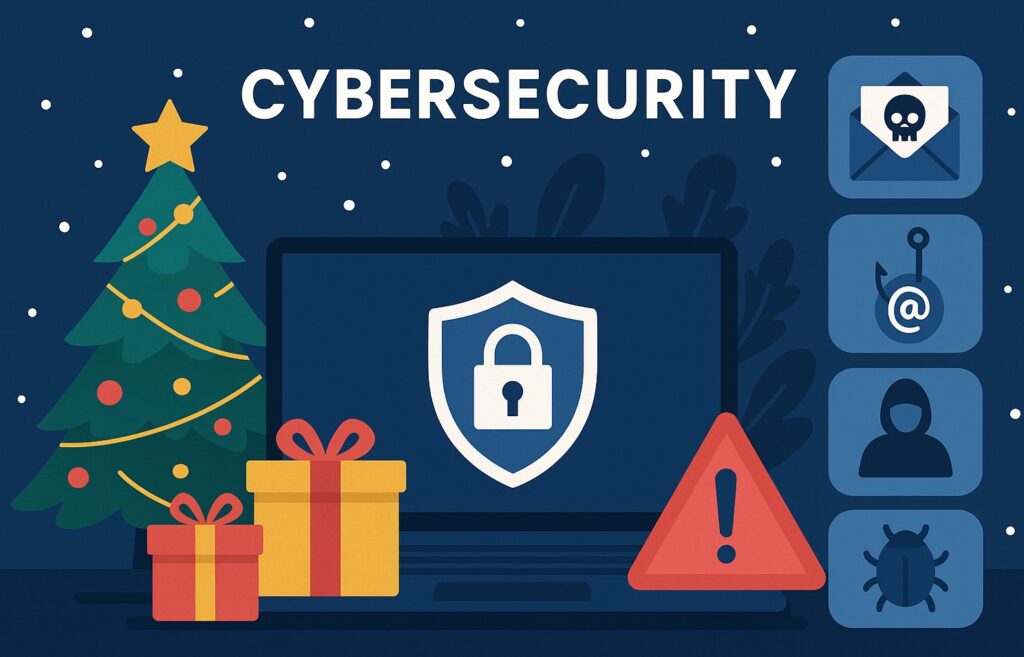
It’s the most wonderful time of the year… for hackers.
We all know the holidays are a chaotic time of year between family, friends, work, and trying to find the string of Christmas lights that actually work. For many small-medium businesses across New England, the rush of year-end order, invoices, and online activity can feel like a sprint to the finish. It’s a time of year for wrapping up and finishing strong… but it’s also a time of year where many let their guard down.
With all the celebration and year-end wrap up, it’s easy to let things slip, and hackers know that better than anyone. For this reason, the last two months of the year are often cited as the most dangerous in terms of cybersecurity and cyberattacks.
In-fact, research from Darktrace has shown that ransomware attacks alone increase by 30% during Nov-Dec.
Why Holidays = More Cyber Risk
More Online Traffic, More Opportunities
During the holidays, many businesses get a final push, more orders, more clients, more transactions. That means more emails, more invoices, more vendor orders, and more online communication. All of that activity creates noise and confusion, which cyber criminals love.
As demand climbs, so does the chance someone clicks a bad link, opens a malicious attachment, or rushes a payment without verifying it. One analysis from Cyberint shows phishing alerts surge by about 46 percent during the holiday season compared to other times of year.
Reduced Staffing and Holiday Distraction
Employees take time off. Some staff work shorter hours. Internal IT and security teams may be operating with a skeleton crew. That means fewer eyes on suspicious behavior, slower response times, and a higher chance that something malicious slips through.
Attackers Get Seasonal — And Sophisticated
During the holidays attackers often change tactics. They send phishing or scam emails pretending to be holiday orders, shipping confirmations, vendor invoices, or last-minute supply requests. Fake vendor invoices or spoofed emails may ask you to pay immediately or change banking info. Some attacks even use fake websites.
Hackers know that you’re likely buried in emails or are not on your A game and use that at their advantage.
Common Holiday Cyber Attacks to Watch Out For
Here are the threats that often target businesses during the holidays:
- Phishing and Spear-Phishing: Emails pretending to be vendors, clients, or delivery services asking for urgent payment or login details.
- Business Email Compromise (BEC): Attackers spoof trusted people or companies and request fund transfers or sensitive information, exploiting holiday distractions or staff being out of office.
- Ransomware: Malicious software that locks up your data or systems — often deployed when businesses are least able to respond, such as during holidays or weekends.
- Fake Vendor or Invoice Fraud: Fake invoices or changed payment instructions sent right when you are trying to wrap up year-end bills.
- Spoofed Websites or Fake Online Stores: Fake sites made to look real, tricking you or your clients into entering login or payment details.
These threats often show up when businesses are busy, have lots of transactions, and may not have full oversight.
Five Simple Steps to Keep Your Business Safe This Holiday Season
1. Pause and Verify Before Paying or Approving
It is tempting to rush invoice approvals or payments at year-end. Instead, build in a simple “pause and verify” step. If you get an invoice or request for payment, especially with changed bank details or unexpected amounts, make someone other than the requestor check it. If things look odd, pick up the phone and call the vendor directly. A quick verification can stop fraud before it starts.
2. Run a Short Holiday-Awareness Refresher for Staff
Even a quick 10-minute refresher with your team can help. Remind everyone to watch for red flags: strange email addresses, requests that demand urgent action, last-minute invoice changes, or unusual URLs. A simple team meeting or email reminder can raise awareness just enough to prevent costly mistakes. The human factor is often the weakest link, especially when people are distracted or under pressure.
3. Update and Patch Systems, and Use Multi-Factor Authentication (MFA)
Before holiday volume ramps up, make sure your essential software is updated and patched. Check remote-access tools, vendor portals, payment systems, and email platforms. Where possible, require multi-factor authentication for any sensitive account email, accounting, vendor portals. These small steps significantly lower the chance that one user’s error leads to a full system breach.
4. Separate Personal Use from Business Systems
During the holidays, staff may access personal email, social media, or shopping sites. That’s fine, but not from work computers or devices connected to your business network. Encourage (or require) that personal online activity stays off business systems. That separation helps prevent scams aimed at individuals from compromising your business.
5. Have a Simple Backup and Incident Response Plan Ready
Don’t wait until after something goes wrong. Have backups ready, local or cloud-based, and make sure someone knows how to restore data if needed. Also define who can approve critical payments or system changes. Make sure someone will be available during holiday windows (even if the main office is closed). A plan ahead of time can save days of downtime or big losses.
Why This Matters for New England Businesses
Whether your business is in Boston, operating out of Providence, supplying clients around Worcester, managing vendors from Hartford, or running operations in Framingham, the message stays the same… Don’t let your guard down. Hackers don’t care if you’re a small business struggling to stay afloat or a large company with all the money in the world, they will take what they can get with the least amount of effort they need to use.
Here’s What You Can Do About It
If you have not yet reviewed your security settings this season, now is the time. Start by patching your systems, enabling multi-factor authentication, and holding a short awareness check with your team. Then build in that “pause and verify” step before any invoice or payment gets approved.
If you need help and want to make sure your cybersecurity is up to the task, get in touch with us at this link to schedule your free cybersecurity audit. We’ll take a look at your current cybersecurity setup, offer our expert recommendations, and highlight a plan to help you keep hackers out before a cyberattack hits your business.
Why Choose Attain Technology
At Attain Technology, we have supported small and mid-size businesses across New England, from Boston to Providence, Worcester to Hartford, for nearly 20 years. We know the risks local firms face during busy seasons. Our proactive IT management, straightforward communication, and 24/7 human support mean your systems work as hard as you do, even during the busiest, most vulnerable time of the year. If you want reliable protection and peace of mind, we are ready to help.
FAQ
Q: Is the holiday season really riskier than other times of year?
A: Yes. Industry data shows a significant uptick in cyber threats during holiday months. For example, phishing alerts increased about 46 percent during holiday periods compared to the rest of the year.
Q: Are small and mid-size businesses really targets — or is it mostly big retailers?
A: Small and mid-size businesses are very much at risk. Many holiday scams target invoice-based businesses, vendors, and firms with modest security. Reports note social engineering, fraud, ransomware, and invoice scams rising dramatically around holidays.
Q: What is the easiest first step we can take today?
A: The easiest, and often most effective, step is to institute a “pause and verify” policy before approving invoices or payments. A quick call to confirm can catch fraud early.
Q: Do we really need backups and incident response even if we have few employees?
A: Yes. Even small firms can suffer big disruption. A simple backup plan and emergency response process can prevent downtime or data loss if something goes wrong.
Q: Is staff training worth it? Even if people already know about phishing?
A: Yes. Holiday-themed scams are often more convincing, and people are busy or distracted. A short refresher helps renew vigilance at exactly the time criminals are most active.
