

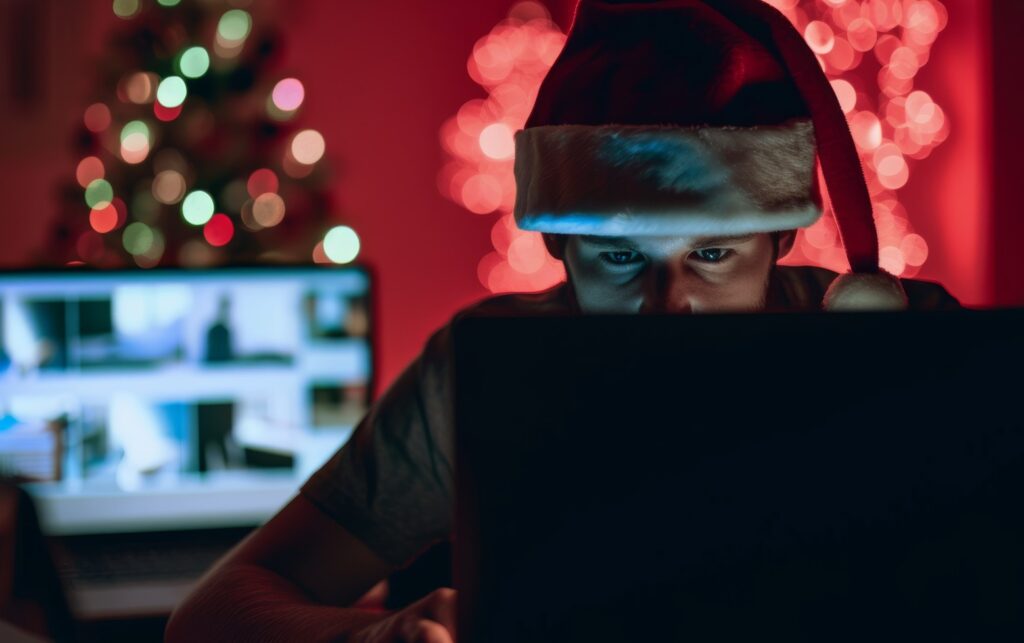
It may be the season of giving, but are you giving hackers a window into your business?
Whether it’s the gifts, the time with friends and family, or the food, there’s something for everyone this time of year. But just because it’s the season of giving doesn’t mean you have to give to everyone.
While you are busy with deliveries and planning, scammers are working harder than ever behind screens to get a gift from you, your data. Whether you run a small business in Providence, a large operation in Boston, or are somewhere in the middle in Worcester and Framingham, you’re a target.
In 2024 alone, scammers stole 16.6 billion dollars from victims in the United States, and with the holidays seeing a 44% increase in cyberfraud alone according to an article from Cyber Technology Insights.
But… how are they doing it? Here’s a few common ways hackers are tricking people this holiday season.
Fake Delivery Notices
Holiday packages create big openings for scammers. You might get an email or a text saying your “delivery is delayed,” “needs extra fee,” or “has a problem.”
The message may claim to be from a major courier like USPS, FedEx, or UPS. If you click the link, you might be sent to a fake website that installs malware or asks for login credentials or payment information.
Because most people expect packages around the holidays, many treat these messages as normal and click quickly. That makes fake delivery notices one of the most common scams this season. Security analysts warn to treat urgent delivery texts or emails as red flags, especially if you did not order anything.
Gift Card Scams
Gift cards are common around the holidays. Scammers know that. One frequent trick: someone pretends to be a boss, coworker, or friend asking for urgent gift-card purchases, maybe for a “client refund,” “vendor payment,” or “end of year bonus.”
They may pressure you to send gift-card codes or PINs quickly. Once you share them, the money is gone. Gift card scams remain among the most common holiday fraud reports. Experts advise never to use gift cards for business payments or emergencies, especially after an unexpected request.
Holiday Email Phishing
Hackers often send fake emails pretending to be from charities, retail stores, or even internal holiday announcements. In busy times like December, people check email fast.
These fake messages may offer “holiday discounts,” “special deals,” or “order confirmations.” They often include a link that leads to a site trying to steal your credentials or install malware.
In 2024 phishing and spoofing topped the list of cybercrimes reported to authorities.
Even emails that look like they come from a vendor or partner might be fake. For small businesses in Worcester, Hartford or Framingham that are processing orders and invoices before year-end, these scams can look real and dangerous.
Fake Shopping Ads or Fake Online Stores
Holiday shopping surges, especially online. In that rush, scammers create fake websites or social-media ads promising steep discounts on popular items.
If you click these ads and enter payment information, you may end up with no delivery and exposed payment details. Fake storefronts and “too good to be true” deals spike around the holidays.
Many New England shoppers use online shopping to avoid holiday crowds. That convenience also brings risk. Always double check that you are on a retailer’s real website before purchasing.
Business Email Compromise During Year-End Rush
For small businesses, maybe you have a team in Providence or Hartford, the end of the year often means invoices, vendor payments, bonuses, and bill payments.
Scammers know this. They may send a fake invoice or pretend to be a vendor requesting an urgent payment. If someone on your finance team clicks and wires money, payment goes straight to the scammer.
In 2024, phishing and related scams were among the top reasons for losses reported to the main crime complaint center.
This kind of business email compromise (BEC) is especially dangerous for small businesses that lack dedicated IT security resources.
Travel, Public Wi-Fi Risks, and Holiday-Travel Scams
Traveling often means using public Wi-Fi in airports, hotels, or coffee shops.
Public Wi-Fi can be insecure. Hackers may intercept data or trick users into logging in to fake networks that steal login credentials or financial information.
If you or your employees log into business email or payment portals on public Wi-Fi, you risk exposing company data and financial info. Holiday-travel scams, fake rental offers, fake ticket refunds, or phony travel deals, also increase this time of year. Security experts warn that travel season is a high-risk time for scams.
Fake Calendar Invites and Shared Files
Scammers sometimes use fake “holiday party invites,” “bonus spreadsheets,” or “gift lists” as bait. They send a link or attachment that seems harmless, maybe a shared file or invite.
Once clicked, the link may install malware or attempt to steal credentials. Because the holiday season is busy, people often click quickly without verifying. That is exactly what scammers rely on. Security warnings advise treating unexpected invites or shared file links with suspicion during year-end.
How to Stay Safe — Simple Steps for New England Business Owners and Employees
Here are easy, practical steps you and your team can use to reduce risk this holiday season:
1. Slow Down and Double Check
If you get an unexpected email or text about a delivery or payment, do not click or act immediately.
Take a moment. Log in directly to the courier’s official website or call them. If it is a vendor invoice, call the vendor using a number you already have.
Any message claiming urgency, “urgent payment needed,” “delivery stuck,” “account problem” , treat it as a red flag.
2. Verify Before You Act
If you get a request to buy gift cards for business payment, pick up the phone and call. Do not reply to the message.
If you see an invoice from a vendor, log in to your vendor portal manually or contact the vendor directly. Do not just trust the email.
If you see a “great holiday deal” ad, go straight to the retailer’s known website instead of clicking the link.
3. Use Multi Factor Authentication (MFA)
Turn on MFA for all business-critical accounts, email, banking, vendor portals, accounting software, file-sharing tools.
Even if a scammer gets a password, MFA adds a second step, like a text or app confirmation, that they usually cannot bypass.
MFA gives your business an extra layer of security during busy holiday weeks.
4. Avoid Public or Unsecured WiFi or Use a VPN
If you or employees travel or work from a coffee shop, airport, hotel, avoid accessing business email or financial portals on public Wi-Fi.
If you need to connect, use a trusted VPN service. That helps protect your data from being intercepted.
Tell employees to avoid logging in to sensitive accounts on public networks during the holiday season.
5. Educate Your Team Now
Send a simple message to your team or hold a quick meeting. Remind everyone that holiday time means holiday scams.
Explain the common tricks: fake invoices, delivery notices, gift card requests, fake invites. Encourage them to verify everything.
A short holiday-scam awareness note can save a lot of trouble.
6. Use Credit Cards or Payment Methods With Protection
For online or vendor purchases, especially one-time holiday orders, use a credit card instead of a wire transfer or gift card.
Credit cards often come with fraud protection. That gives you a safety net if something goes wrong.
7. Report Suspicious Activity Immediately
If you or someone on your team spots a suspicious email, invoice, or text, do not ignore it.
Report it to your bank, or to the appropriate authorities. Early reporting can help prevent further fraud.
Want To Take Your Cybersecurity To The Next Level?
If you want help reviewing your business’s cybersecurity plan, from safe WiFi practices to secure email and payment procedures, we can help with our free cybersecurity audit.
We’ll take a closer look at your cybersecurity setup, see what’s working, what’s a risk, and give you the roadmap on what needs to be done in order to keep your business safe.
Sign up today, before a cybercriminal makes your business their Christmas gift.
Click Here to Secure Your Spot
Availability is limited to 5 businesses per quarter.
Frequently Asked Questions
Q1: Are holiday scams different from regular phishing scams?
Yes. During the holidays scammers often use holiday-specific themes — packages, gift cards, holiday discounts, charity requests — to trick people. That extra context can make scams more convincing and harder to spot.
Q2: If I use a company credit card for purchases, is that safer?
Yes. Credit cards often offer fraud protection. If something goes wrong — a fake website or bogus vendor — you may be able to dispute the charge. That is safer than wire transfers or gift-card payments that offer little recourse.
Q3: What if a fake invoice looks real — how can I tell?
Always verify by contacting the vendor directly using a known phone number or portal login. Do not reply to the email. Check for unusual urgency, unexpected changes to account info, or last-minute invoice requests.
Q4: Is public WiFi really risky for business use?
Yes. Public or unsecured WiFi — at airports, hotels, or coffee shops — can expose login credentials, email accounts, or financial data. If you or your employees log into business accounts there, the risk is real.
Q5: What should I do if someone on my team clicks a suspicious link?
Disconnect from the internet immediately. Change passwords, enable MFA, and scan devices for malware. If financial information was involved, alert your bank. Consider consulting with your IT provider to check for further security issues.
